2026 Best Police Drone Detector for Global Buyers
Choosing the 2026 Best Police Drone Detector for Global Buyers requires more than comparing detection ranges. Police teams need dependable awareness around stations, prisons, stadiums, borders, and emergency scenes. A useful system should identify drone signals, estimate direction, and support clear operator decisions. It should not promise perfect results.
Arthur Holland Michel, a recognized counter-drone researcher, once stated, “Detection is the beginning of a decision, not the decision itself.” That principle remains important. A Police Drone Detector may perform well in open farmland but struggle near concrete buildings, radio towers, heavy traffic, or dense urban networks. Buyers should examine signal coverage, false-alarm control, weather resistance, software updates, installation time, and integration with existing command systems.
Field experience also matters. Officers may work from a vehicle, a rooftop, or a temporary checkpoint. The screen must remain readable in bright sunlight. Alerts should be understandable during stress. A complicated interface can delay a simple judgment. Sometimes, fewer features are safer.
This guide compares detector types, practical specifications, deployment costs, and supplier support for international purchasing teams. It considers lawful, proportionate use and responsible data handling. Regional operating requirements can differ greatly, even among neighboring countries. That detail is easy to overlook.
No single detector fits every mission. A reliable shortlist should include verified test results, documented limitations, training needs, and long-term maintenance. Buyers should ask difficult questions before signing. The strongest product on paper may not be the strongest product in the field.
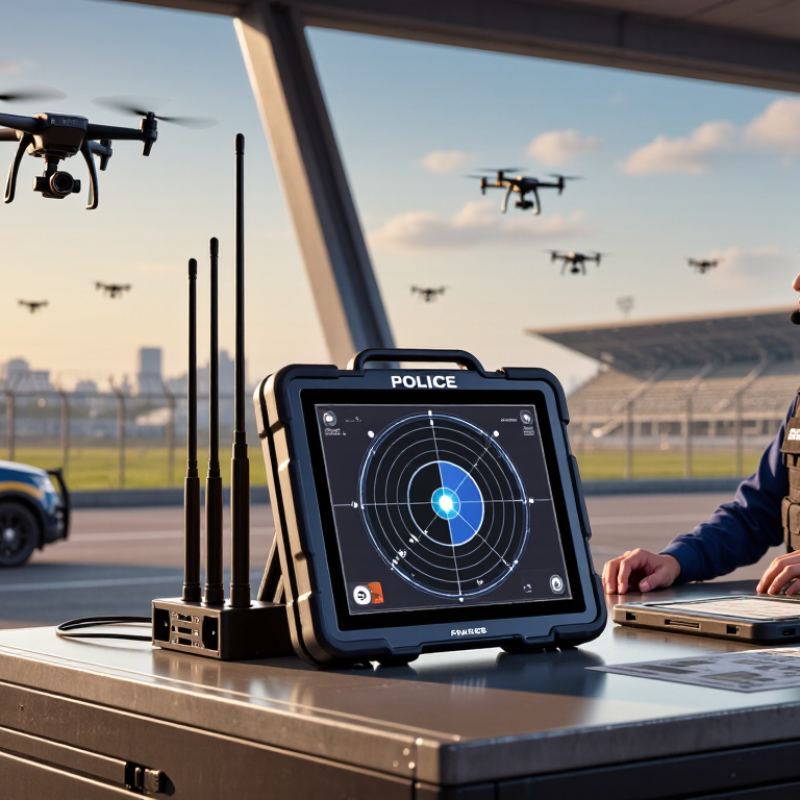
What Is a Police Drone Detector and Why Does It Matter in 2026?
A police drone detector is a lawful security tool that identifies nearby unmanned aircraft. It may combine radio-frequency sensing, radar, acoustic analysis, or Remote ID reception. Unlike a jammer, it observes and reports. This distinction matters because detection supports safety without disrupting communications or flight control.
In 2026, police agencies face crowded skies near stations, stadiums, airports, and emergency scenes. A reliable detector can show an aircraft’s direction, estimated distance, and movement pattern. Operators can then verify the alert through approved procedures. Clear evidence matters. A flashing warning alone is not enough.
Field evaluations show that performance changes with buildings, weather, traffic, and signal strength. No detector is perfect. Some systems may mistake wireless equipment or birds for drones. That weakness deserves honest testing, not marketing language. Buyers should request demonstrations in realistic locations and measure alert time, false alarms, data storage, and operator training needs. Local aviation, privacy, radio, and public-safety rules also require careful review. A product accepted in one country may need different approvals elsewhere.
The best choice is not always the most expensive system. It is the one that fits the agency’s risk, site layout, staffing, and legal duties. Small details matter, including screen readability during rain and battery performance during long shifts. A thoughtful procurement process protects the public and reduces avoidable mistakes.
Key Detection Technologies Used in Modern Police Drone Detectors
2026 Best Police Drone Detector for Global Buyers
Key Detection Technologies Used in Modern Police Drone Detectors
Modern police drone detectors combine several sensing methods to identify unmanned aircraft near protected areas. Radio-frequency detection listens for control links between a drone and its operator. It can reveal signal strength, frequency patterns, and approximate direction. However, some drones use limited radio communication. That creates blind spots.
Radar adds another layer. It tracks moving objects by measuring reflected radio waves, distance, speed, and altitude. Compact radar systems can work during darkness and light rain. Their performance may decrease around buildings, trees, birds, or heavy weather. Operators should examine local terrain before choosing equipment.
Electro-optical and infrared cameras help confirm visual details. They can support identification during daylight, low light, or nighttime conditions. Acoustic sensors may detect distinctive motor sounds at shorter distances. Sensor fusion combines these inputs through software, reducing reliance on one technology. That matters in busy urban environments.
Human review remains important. Automated alerts can confuse birds, helicopters, or construction equipment with drones. No sensor is perfect. In field testing, teams should record false alarms, detection distance, weather, and response time. Systems should also use secure data handling, clear access controls, and lawful operating procedures. Independent testing reports and trained operators provide stronger evidence than marketing claims. Global buyers should verify regional frequency rules, privacy requirements, maintenance support, and integration with existing monitoring systems. A detector that performs well in an open field may struggle between tall buildings. That remains a practical weakness.
How to Compare Detection Range, Accuracy, and Response Speed
Choosing the best police drone detector in 2026 starts with practical comparison, not impressive specifications. Detection range should match the site, terrain, and expected flight altitude. Open fields may support longer range, while buildings, trees, and heavy traffic can reduce performance. Test the system in real conditions. A laboratory result is only a reference.
Accuracy matters just as much. A reliable detector should distinguish drone signals from nearby wireless devices and environmental noise. Ask for documented false-alarm rates and independent test data. Response speed is equally important during crowded events or protected-site monitoring. Delayed alerts reduce operational value. However, faster alerts are not always better if they create frequent false warnings. I have seen teams focus on range and overlook this trade-off.
Tips: Compare range, accuracy, and response speed under the same conditions. Request trial data from several locations. Check performance in rain, darkness, and dense urban areas. Confirm whether the detector identifies aircraft types or only signal activity. Review software update policies and staff training requirements. Local privacy, radio, and aviation rules must guide deployment. Even experienced buyers can miss maintenance costs, so include calibration, battery replacement, and technical support in the evaluation. Reliability grows through repeated testing, not attractive numbers.
Legal, Operational, and Environmental Factors for Global Buyers
2026 Best Police Drone Detector for Global Buyers
Legal, Operational, and Environmental Factors for Global Buyers
A police drone detector must fit local law before it fits a procurement budget. The FAA’s 2024 Aerospace Forecast reports more than 850,000 registered U.S. drones, showing the scale of civilian air activity. In the United States, Remote ID rules affect identification and data handling. European buyers must also consider Regulation (EU) 2019/947 and privacy requirements. Other jurisdictions may restrict radio monitoring near airports, borders, or public events. Passive detection is usually easier to justify. Still, legal review should happen before field testing.
Operational design matters more than impressive laboratory range. A capable system should combine radio-frequency, optical, acoustic, or radar inputs. It should record time, location, confidence, and operator actions. The FAA’s forecast confirms continuing growth in commercial drone operations, so false alarms can quickly burden small teams. Airports, police stations, and stadiums also create different signal conditions. Ask for independent test procedures, not only vendor-provided results. I would not trust one detection score.
Weather changes the answer. Rain weakens optical performance, while buildings can block radio paths. Heat can shorten battery life and affect outdoor electronics. The World Meteorological Organization reported 2023 as approximately 1.45°C above the 1850–1900 average. That broader trend supports wider temperature and weather testing. A practical trial should include fog, glare, heavy rain, and crowded radio environments. Perfect coverage is unlikely. Procurement teams should document those gaps honestly.
Best Police Drone Detector Selection Criteria for Different Agencies
Police agencies need a drone detector that fits their real operating environment, not just a promising specification sheet. Selection should begin with mission needs: airport protection, event security, border observation, or emergency response. Each setting creates different detection challenges. Urban buildings can weaken signals, while hills and heavy rain can reduce coverage. Field trials matter more than brochure claims.
A practical system should combine reliable detection, clear alerts, and accurate location information. Agencies should examine detection range under local conditions, false-alarm rates, response time, and performance across common drone communication methods. The user interface should remain readable in a patrol vehicle, even at night. It should also support evidence records with timestamps, operator notes, and secure access controls. Privacy safeguards are essential, especially near homes, schools, and public gatherings. Local frequency regulations and procurement rules must guide every deployment.
Integration deserves careful attention. The detector should connect with approved command platforms without creating complicated workflows. Staff training should include ordinary scenarios, such as birds, construction equipment, and crowded radio environments. Maintenance teams need replacement plans, software support, and clear testing procedures. No detector performs perfectly in every location. That is easy to forget. A small pilot program can reveal weak coverage, confusing alerts, or training gaps before wider investment. Independent testing and documented user feedback provide stronger evidence than impressive marketing language.


