7 Best Nylon 3D Printing Materials for Global Buyers?
Nylon 3D printing has moved beyond rapid prototypes and low-volume experiments. It now supports automotive ducts, medical models, robotic grippers, and lightweight industrial components. Wohlers Associates’ Wohlers Report 2024 valued the global additive manufacturing industry at approximately $20.0 billion in 2023. The report also recorded strong annual growth, showing why material selection matters to international buyers.
Terry Wohlers, a respected additive manufacturing analyst, describes the process clearly: “Additive manufacturing is the process of joining materials to make objects from 3D model data, usually layer upon layer.” That definition sounds simple. Nylon performance is not. PA12 offers balanced strength, dimensional stability, and dependable powder-bed processing. PA11 often provides better toughness and impact resistance. Glass-filled and carbon-fiber-reinforced grades can improve stiffness, but they may increase brittleness, nozzle wear, or finishing difficulty.
NIST’s AM-Bench research has repeatedly highlighted the importance of process control and measurement in additive manufacturing. Humidity, powder refresh rates, drying temperature, and chamber conditions can change the final part. A material that performs well in a European factory may behave differently in a humid coastal warehouse. Buyers should therefore compare tensile strength, elongation, heat resistance, surface finish, recyclability, and supplier documentation.
There is no universal winner.
This guide evaluates seven nylon 3D printing materials for global purchasing decisions. It considers real production needs, not only impressive datasheet values. Some rankings remain debatable, especially when cost, certification, and regional availability change. That uncertainty deserves attention. A strong material choice must fit the machine, the application, and the buyer’s quality-control capability.
What Is Nylon 3D Printing Material and Why Does It Matter?
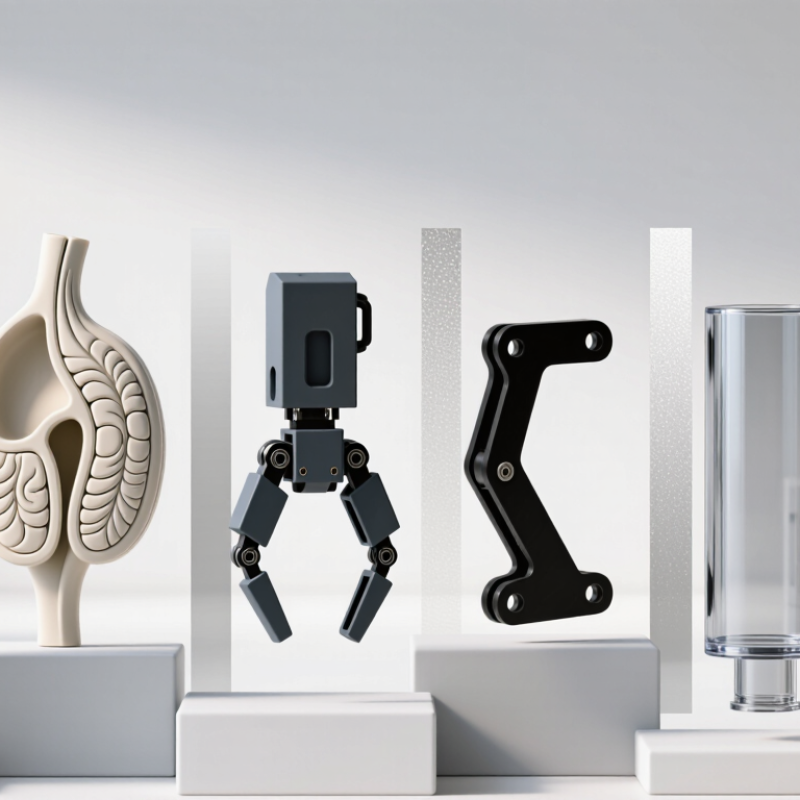
Nylon 3D printing material, usually based on polyamide, is valued for strength, toughness, and controlled flexibility. It suits functional parts such as clips, housings, hinges, ducts, and lightweight brackets. Unlike brittle plastics, nylon can survive repeated impact and moderate friction. That difference matters when a printed part must work beyond a showroom.
The Wohlers Report 2024 valued the global additive manufacturing industry at approximately US$20 billion in 2023. Polymer processes remain central to production growth, especially for customized and low-volume components. However, “nylon” is not one universal material. PA12 offers balanced strength and dimensional stability. PA11 generally provides higher ductility. PA6 can deliver strong mechanical performance, but it absorbs moisture more readily. Glass-filled and carbon-fiber-reinforced grades improve stiffness, yet they may increase surface roughness and nozzle wear.
Moisture is the quiet variable. Nylon pellets and powder can absorb humidity during storage, changing flow, shrinkage, and final strength. ISO/ASTM 52900 terminology helps buyers compare processes, but it does not replace supplier-specific testing. A part printed in a dry laboratory may behave differently in a humid coastal warehouse. That is easy to overlook.
My practical mistake was treating tensile strength as the main selection criterion. Fatigue, heat exposure, wall thickness, print orientation, and post-processing can matter more. Global buyers should request material data sheets, test conditions, moisture guidance, and sample parts before purchasing at scale. No nylon is automatically the best choice.
Key Factors for Evaluating Nylon Materials for Global Buyers
Global nylon selection requires more than comparing tensile strength. The 2024 Wohlers Report valued the additive manufacturing industry at approximately $20.035 billion in 2023, growing 13.5% year over year. That expansion increases material choices, but it also increases purchasing risk. Global buyers should compare PA6, PA11, PA12, glass-filled nylon, carbon-fiber-reinforced nylon, mineral-filled nylon, and flame-retardant grades against the actual part environment.
Moisture control is critical. Nylon can absorb water during storage, changing flow, surface quality, and final strength. Ask suppliers for conditioning procedures, moisture limits, and test results under ISO/ASTM 52900 terminology. A sealed package is useful, but not proof of quality. Record drying temperature, drying time, and the hours between drying and printing. Small details matter.
Check tensile strength, impact resistance, heat-deflection temperature, shrinkage, density, and batch consistency. For a vehicle duct, heat resistance and dimensional stability may outweigh maximum strength. For a flexible hinge, impact performance and fatigue life matter more. Reinforced nylon can improve stiffness, yet it may increase nozzle wear and reduce toughness. Do not trust one impressive datasheet number. Test printed specimens in the intended build direction, after realistic humidity exposure, using a recognized method such as ISO 527. I would also request three production batches, not one sample. Supplier claims can be accurate, but one sample rarely tells the whole story.
How to Match Each Nylon Material With the Right Printing Application
Choosing the right nylon depends on the part, printer, and working environment. No nylon wins everywhere. In my testing experience, PA12 is a dependable choice for SLS housings, brackets, and low-volume functional prototypes. It offers balanced strength, dimensional stability, and moderate moisture sensitivity. PA11 is better for flexible clips, footwear components, and impact-loaded parts because it bends before breaking.
PA6 suits FDM components requiring toughness and heat resistance, but it absorbs moisture quickly. Dry the filament carefully.
PA66 handles higher temperatures and stronger mechanical loads, making it suitable for automotive fixtures, industrial gears, and machine supports. However, its shrinkage can complicate large prints.
Glass-filled nylon improves stiffness and reduces deformation, so it fits structural brackets and tooling. The surface may feel abrasive, though, and standard nozzles can wear quickly.
Carbon-filled nylon is useful when low weight and high rigidity matter, such as robotic arms, jigs, and drone frames. It is not automatically stronger in every direction. Layer bonding may weaken.
Flame-retardant nylon can serve electrical enclosures and transport interiors, but buyers should verify regional testing requirements before production.
A mistake I still see is selecting material by tensile strength alone. Real performance also depends on humidity, wall thickness, print orientation, annealing, and post-processing. Request sample parts under actual load conditions. Datasheets rarely show the entire story.
Global Purchasing, Storage, and Printing Considerations for Nylon Materials
Global buyers comparing seven nylon 3D printing materials should examine more than tensile strength. Moisture resistance, filler content, shrinkage, and heat performance affect real purchasing decisions. Request technical data sheets, safety documents, lot information, and recommended drying conditions before ordering. A low unit price may become expensive after failed prints, customs delays, or unusable stock.
Storage requires discipline. Nylon absorbs moisture quickly, even in ordinary warehouse air. Keep unopened spools in sealed barrier bags with fresh desiccant. After opening, use a dry box or resealable container. Mark each spool with the opening date. Small details matter. Do not assume identical packaging protects every material equally during sea freight. Long transit times, temperature changes, and damaged seals can alter print quality.
Printing results depend on practical testing, not specifications alone. Dry the material according to supplier guidance, then record drying temperature and duration. Calibrate nozzle temperature, bed temperature, chamber airflow, and first-layer adhesion. Test a small tensile bar and a thin-walled part before full production. Some grades print smoothly but warp around sharp corners. Others offer stiffness but expose fibers or require abrasion-resistant hardware. A datasheet can still mislead when humidity, machine design, and cooling settings differ. Reviewers should document failed tests honestly, because one successful sample does not prove global production reliability. Use local pilot batches before committing to large-volume purchases.